Looking for a Status.io Alternative?

StatusHub provides stronger operational control during incidents, multi-audience communication, and predictable pricing as your infrastructure becomes more complex.

StatusHub vs. Status.io: Key Differences at a Glance

Both platforms provide hosted status pages, incident communication, subscriber notifications, and monitoring integrations. Here's how they differ, feature by feature.

Capability StatusHub Status.io
Predictable pricing Per-page pricing
Multi-page organization Independent pages
Follow-up incidents Not available
Draft mode Not available
Advanced maintenance scheduling Basic
Native multilingual pages Google Translate
Private status pages Higher plans only
Custom CSS / HTML Not available Higher plans only
Subscriber email domain restrictions Not available
SAML SSO Higher plans only
Metrics dashboard Available per request
Service status widgets
Integrations support

Where StatusHub Delivers More Value

  • Operational Control During Incidents

    StatusHub helps communicate carefully during incidents instead of simply publishing updates as quickly as possible. Key capabilities include:

    •  Draft mode for incident and maintenance updates

    •  Follow-up incidents linked to the original event

    •  Undo published events

    •  Advanced incident search and filtering

    •  Clear separation of active, draft, and historical incidents in the control panel

    •  Visibility into who created each incident


    These features reduce mistakes, improve collaboration, and make incident communication easier to manage when every minute matters.
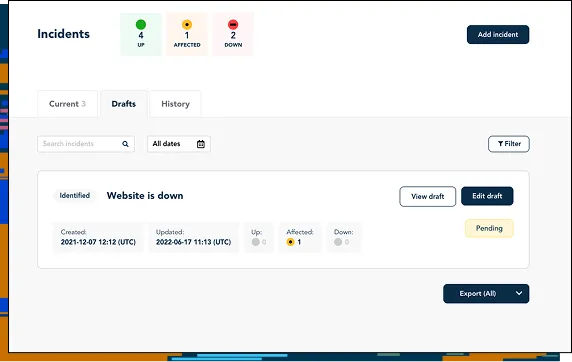
    Operational Control During Incidents screenshot
  • Built for Organizations Managing Multiple Status Pages

    Many organizations don't operate a single status page. They need dedicated communication for products, customers, regions, internal services, or departments.

    StatusHub makes this manageable through Connected Hubs and centralized multi-page administration.

    Instead of managing completely independent status pages, administrators can organize related pages into a structured hierarchy while giving every audience access only to the information that is relevant to them.
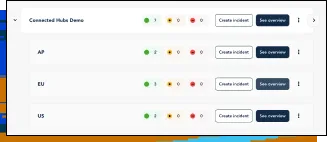
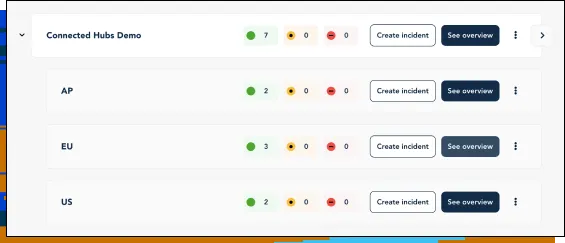
    Built for Organizations Managing Multiple Status Pages screenshot
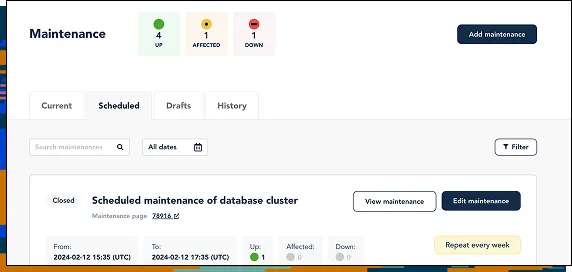
  • Advanced Maintenance Management

    Planned maintenance shouldn't create additional operational work. StatusHub helps teams automate maintenance communication through:

    •  Recurring maintenance schedules

    •  Automatic incident suppression during maintenance events

    •  Service-specific maintenance statuses

    The result: less repetitive admin work, fewer false alerts, more accurate subscriber updates.
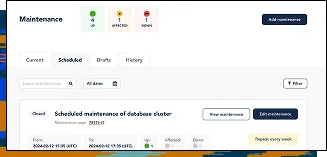
    Advanced Maintenance Management screenshot
  • Security and Access Control

    Many organizations often need enterprise security without paying for an enterprise plan. StatusHub includes:

    •  SAML Single Sign-On on all paid plans

    •  StatusHub is SOC 2 compliant

    •  Private status pages on every plan

    •  Subscriber email domain restrictions

    •  Custom email sending domains

    •  Role-based permissions
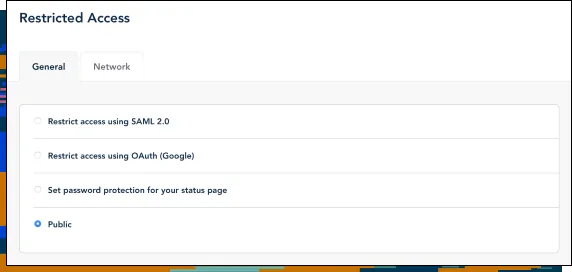
    Security and Access Control screenshot

Pricing

StatusHub and Status.io are priced similarly across comparable tiers. The difference is in how pricing scales. 

Status.io charges per status page, increasing costs as your communication strategy expands.

StatusHub includes unlimited status pages in every plan, so adding new products, customers, or environments doesn't require purchasing another status page license.

See the StatusHub pricing

Status Page Examples

Powered by StatusHub

  • Citrix

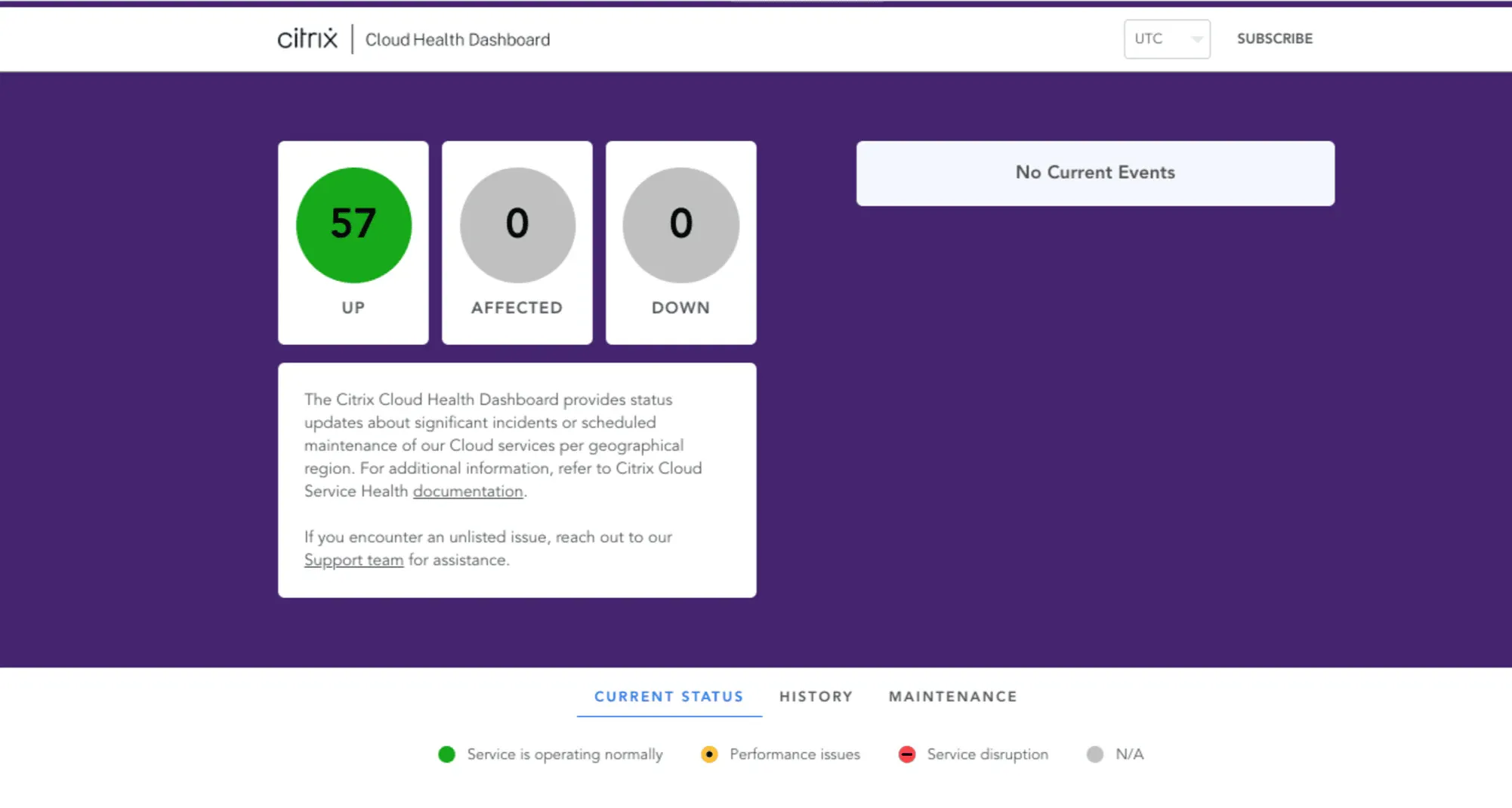
    Citrix status page by StatusHub

    The Citrix Cloud Health Dashboard communicates incidents, maintenance, and service availability across different geographic regions.

    View the live status page -->
  • Texas State University

    Texas State University status page by StatusHub

    Texas State University uses its status page to keep students, faculty, and staff informed about IT service availability, planned maintenance, and ongoing incidents.

    View the live status page -->

Final Perspective

Status.io is a mature platform with real strengths in monitoring integrations, public metrics dashboards, and page-level customization. For organizations that prioritize automation, deep integrations, and complete control over page design, it remains a compelling choice.

StatusHub takes a different approach: Instead of maximizing customization, it focuses on making incident communication faster, clearer, and easier to manage across multiple pages. Features like Draft Mode, Connected Hubs, advanced maintenance management, and pricing that doesn't multiply per page help teams reduce operational complexity while keeping communication accurate under pressure.

For organizations that value operational control, multi-audience communication, and predictable growth, StatusHub is often the better long-term fit.

Frequently Asked Questions

  1. 1.  Is StatusHub a good alternative to Status.io?
    expand icon

    Yes. StatusHub is often chosen by organizations that need more control over incident communication, support for multiple audiences, and predictable pricing without per-page licensing.

  2. 2.  How does StatusHub pricing compare to Status.io?
    expand icon
  3. 3.  Can I create private status pages in StatusHub?
    expand icon
  4. 4.  Does StatusHub support enterprise authentication?
    expand icon
  5. 5.  Does StatusHub limit the number of services I can monitor?
    expand icon
  6. 6.  Does StatusHub integrate with monitoring tools?
    expand icon

See How StatusHub Works for Your Setup

Schedule a Demo Start Free Trial