Statuspage Alternative: Why Organizations Choose StatusHub

Alternative to Atlassian Statuspage for organizations that need private status pages, predictable pricing, and more control over incident communication.

StatusHub vs Statuspage: Key Differences

Both platforms cover the basics of incident communication. The differences come down to pricing structure, flexibility, and how well they support more complex setups.

Capability StatusHub Statuspage
Pricing model Predictable tiers Per-page pricing
Private status pages Higher plans only
Connected hubs Not available
Component limits Unlimited ~1,100 maximum
Multilingual pages Native support Requires third-party integration
Branding removal Not available
Maintenance settings Advanced control Limited
Past incident log Advanced control Limited
Subscriber email domains control Not available
SMS notifications Plan-based limits Unlimited
Third-party metrics display Limited Extensive
Draft Incident Updates Not available
Service status widgets
Integrations support

Where StatusHub Delivers More Value

  • Predictable Pricing

    StatusHub uses flat-tier pricing that includes features often locked behind higher plans elsewhere: private pages, connected hubs, and branding removal. Organizations managing multiple status pages may find this particularly valuable, since StatusHub includes unlimited pages within each plan rather than charging per page.

    This matters most for:

    •  SaaS platforms managing multiple products or environment-specific pages

    •  Managed service providers running separate pages for different customers

    •  Universities and distributed organizations

    •  Mid-size companies with complex IT infrastructure
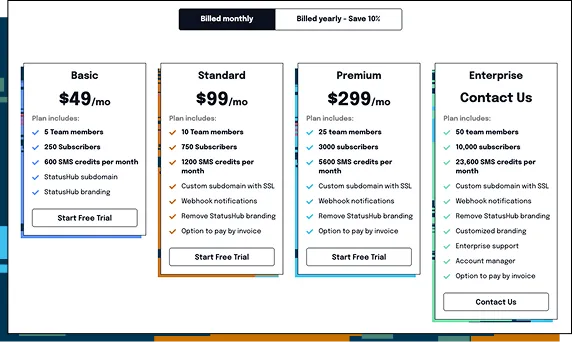
    Predictable Pricing screenshot
  • Advanced Maintenance Management

    StatusHub offers more granular control over scheduled maintenance that reduces operational overhead and prevents false alarms during planned work:

    •  Recurring maintenance scheduling: Set up weekly, monthly, or custom maintenance windows once instead of recreating them manually;

    •  Automated incident suppression during maintenance: Prevent monitoring tools from creating false alarms when systems are intentionally down;

    •  Service status control: Set specific service status during maintenance windows for accurate communication.
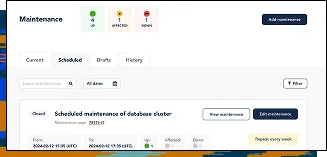
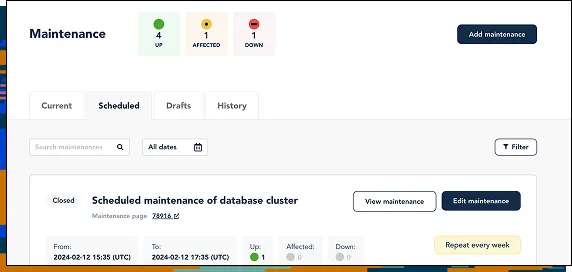
    Advanced Maintenance Management screenshot
  • Multilingual Status Pages Without Workarounds

    StatusHub supports multilingual pages natively, making it easier to communicate with customers in their preferred language without relying on third-party tools

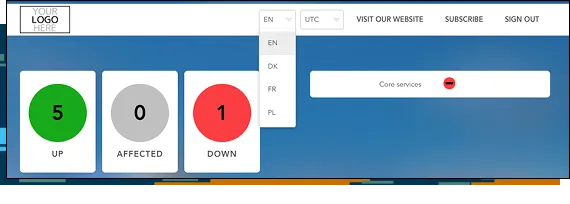
    Multilingual Status Pages Without Workarounds screenshot
  • Manage Multiple Status Pages from One Place

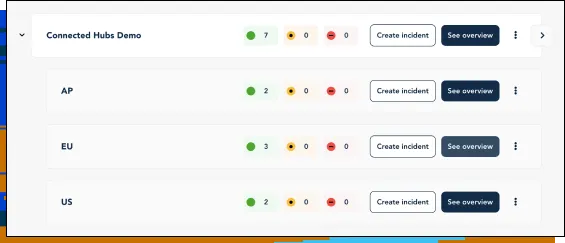
    StatusHub’s Connected Hubs let teams manage multiple audience-specific status pages from a centralized structure while keeping communication targeted.

    This is useful when:

    •  Different customers need different visibility

    •  Systems are interconnected

    •  You manage regional or product-specific pages
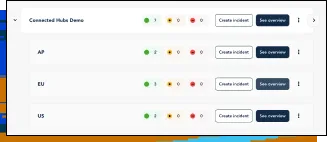
    Manage Multiple Status Pages from One Place screenshot
  • Draft Mode for Incident Communication

    Prepare and review incident or maintenance updates before publishing. This allows internal review and avoids rushed or unclear communication during incidents. Learn more.
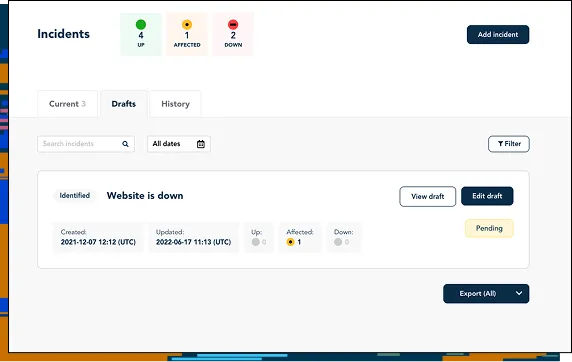
    Draft Mode for Incident Communication screenshot

Where Statuspage Has Strengths

Transparent comparisons build trust. There are areas where Statuspage currently has broader functionality:

  • Unlimited SMS notifications

  • Large third-party integration catalog 

  • Built-in public metrics integrations from monitoring tools 

  • Free entry plan for small teams

  • More status page customization options (Custom CSS/HTML/JS)

Examples of Status Pages

Powered by StatusHub

  • Enterprise

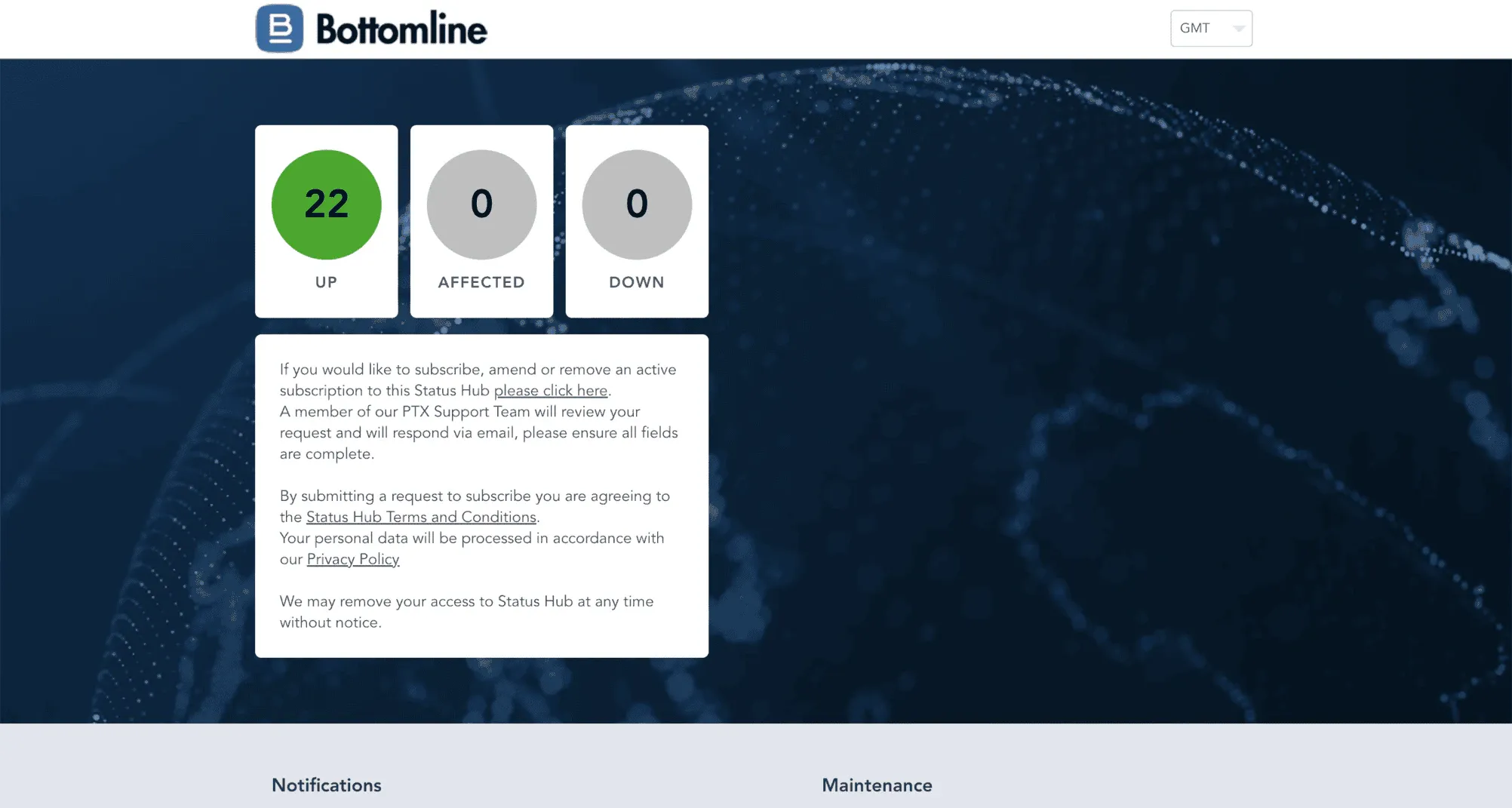
    Bottomline status page by StatusHub

    “Bottomline is at the forefront of making complex business payments simple, smart, and secure.” The company helps thousands of companies, in 92 countries, around the world.

    View the live status page -->
  • The George Washington University

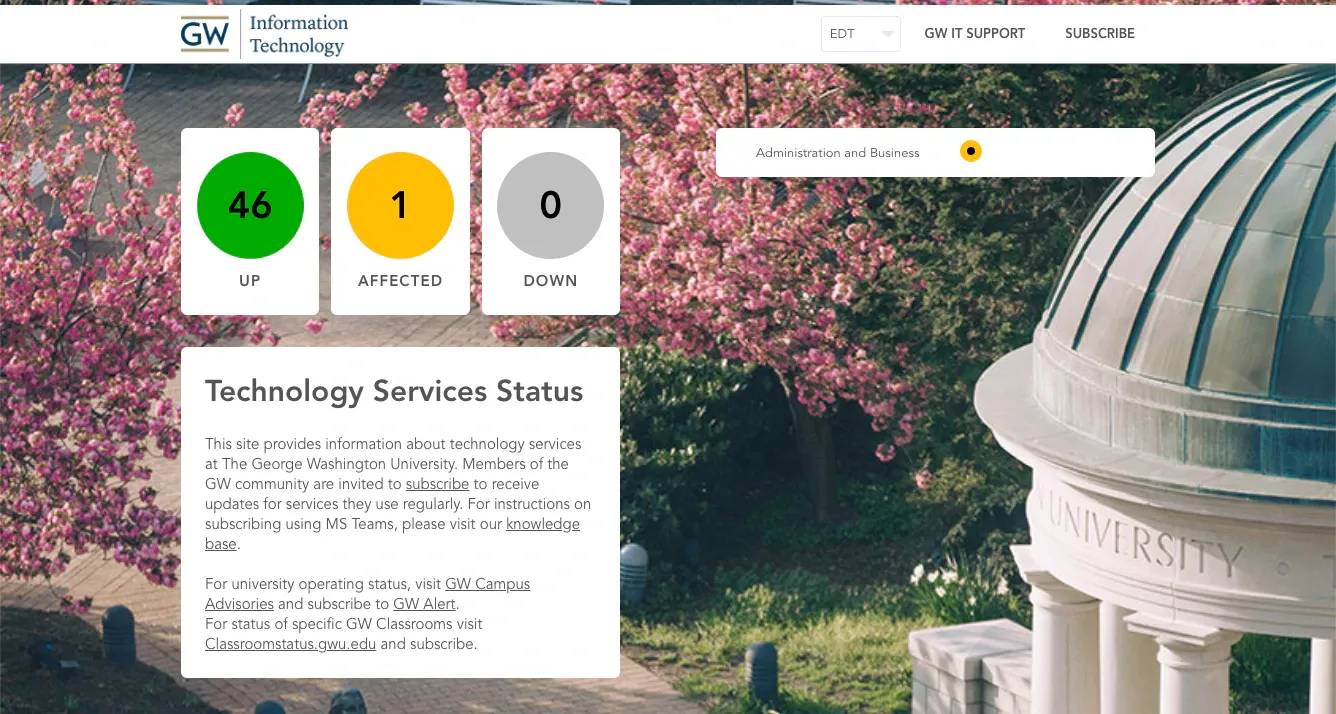
    The George Washington University status page by StatusHub

    The George Washington University is a private federally chartered research university in Washington, D.C.

    View the live status page -->

Final Verdict

Statuspage is a well-known platform, but recognition alone doesn't determine operational fit. 

For organizations managing multiple audiences, private pages, or more complex maintenance and incident workflows, StatusHub offers greater flexibility and more predictable scaling as operational needs grow.

This is especially relevant for SaaS platforms, MSPs, educational institutions, and enterprise teams operating across products, customers, or regions.

The question isn't just "which is better", it's "which platform aligns with how your infrastructure actually works?"

Frequently Asked Questions

  1. 1.  Is StatusHub a good alternative to Atlassian Statuspage?
    expand icon

    Yes. StatusHub is chosen by organizations looking for predictable pricing without per-page fees, private status pages included on all plans, advanced maintenance controls, and better support for multi-page incident communication.

  2. 2.  Does StatusHub support private status pages?
    expand icon
  3. 3.  Can I manage multiple status pages in StatusHub?
    expand icon
  4. 4.  Does StatusHub support multilingual status pages?
    expand icon
  5. 5.  Is StatusHub suitable for enterprise organizations?
    expand icon

See How StatusHub Works for Your Setup